
Operator Training & Simulation
IDS develops DCS simulation systems and Operator Training Simulators (OTS) that reproduce process behavior, control-system response, alarms, graphics, and operating scenarios in a safe training environment.
Our simulation systems help operators build familiarity with normal operations, process disturbances, equipment failures, startup and shutdown procedures, and abnormal conditions without affecting the live control system.
Develop high-fidelity training environments that replicate operator displays, controls, alarms, and process response.
Model process behavior, equipment performance, control loops, and operating conditions to support realistic simulation.
Reproduce DCS logic, graphics, sequences, interlocks, and system response within the simulator environment.
Integrate process models, control-system components, instructor functions, and training scenarios into a complete simulator environment.
Model pumps, valves, vessels, heat exchangers, rotating equipment, and other process assets to reproduce realistic operating behavior.
Create training scenarios for startups, shutdowns, process upsets, equipment failures, alarm response, and abnormal operating conditions.
Track operator actions, response times, sequence execution, and exercise results to support structured training and performance evaluation.
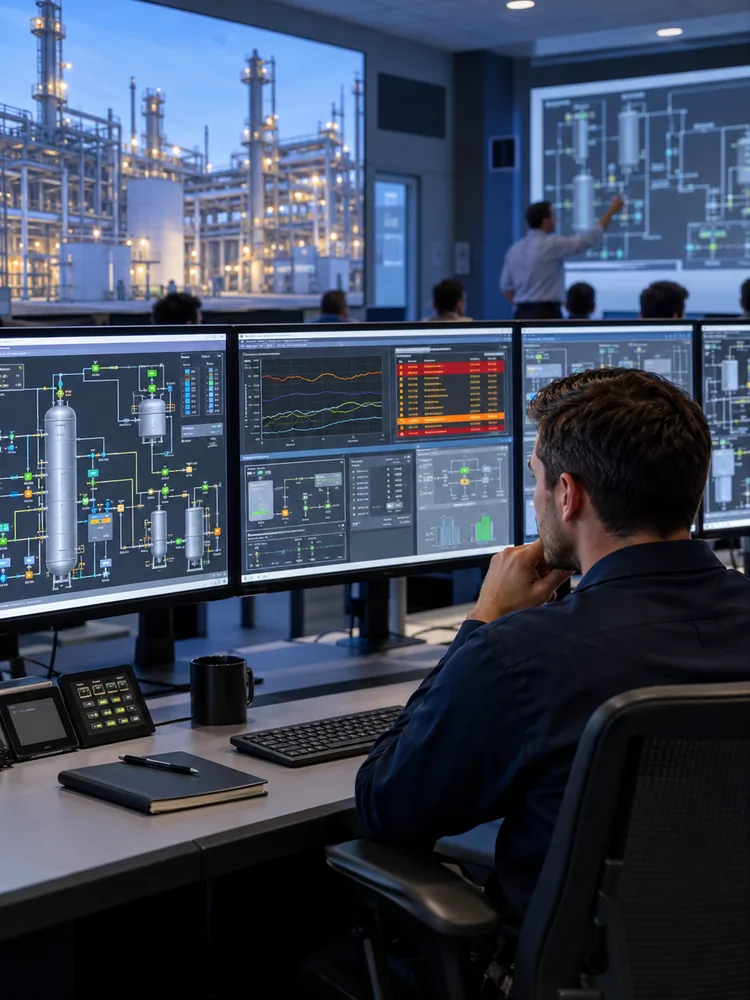
IDS develops high-fidelity DCS simulation systems that reproduce process behavior, operator interaction, control logic, alarms, graphics, and equipment response in a realistic training environment.
Simulation models are configured around actual plant operating conditions, control strategies, equipment characteristics, and training objectives to provide operators with a representative control-room experience.
IDS begins by reviewing the existing control system, process information, graphics, control logic, operating procedures, equipment data, and training requirements.
The simulator is then developed to reproduce normal operations, process dynamics, equipment behavior, control-system response, and selected abnormal conditions without affecting the live plant.
The resulting simulation environment supports operator familiarization, procedure training, upset-response practice, and structured performance evaluation.
Key Capabilities
Dynamic process and equipment modeling
Startup and shutdown scenario development
DCS graphics and control-system emulation
Abnormal condition and equipment-failure simulation
Alarm, interlock, and sequence simulation
Instructor controls and exercise grading
Simulation Development
IDS develops dynamic process models that reproduce plant behavior across normal operations, transitions, disturbances, and equipment failures.
Models are built around process characteristics, equipment performance, control strategies, operating limits, and system response to create a realistic simulation environment.
Detailed modeling helps ensure the simulator responds credibly to operator actions and supports meaningful training across a wide range of operating conditions.
Model process behavior, material and energy interactions, operating ranges, transitions, and time-dependent responses that influence how the simulated plant behaves.
Represent pumps, valves, vessels, heat exchangers, rotating equipment, instruments, and other process assets with realistic operating characteristics and failure behavior.
Simulate control-loop response, interlocks, permissives, alarms, process disturbances, equipment failures, and abnormal operating conditions to support realistic operator training.
Simulation System Deliverables
Dynamic Process Models
Instructor Controls
DCS Emulation
Exercise Grading Tools
Operator Graphics Integration
Simulation Documentation
Control Logic Integration
Training Scenarios
Control System Fidelity
IDS simulation systems can replicate the operator environment, graphics, control logic, alarms, sequences, and system behavior used in the production control system.
Maintaining a familiar operating environment helps reduce the disconnect between training and plant operation, allowing operators to practice procedures and respond to process conditions using interfaces and control behavior that closely reflect the production system.
Reproduce operator graphics, navigation, alarms, controls, trends, and system interactions within the training environment.
Integrate or emulate control logic, sequences, interlocks, permissives, and loop behavior to provide realistic system response.
Training Management
IDS develops instructor tools that allow training personnel to configure scenarios, introduce process disturbances and equipment failures, control simulation conditions, and evaluate operator performance.
Exercises can be structured around normal operations, startups, shutdowns, process upsets, alarm response, equipment failures, and other plant-specific operating scenarios.
Start, pause, reset, accelerate, or modify simulation conditions and introduce predefined events during training exercises.
Evaluate operator actions, response times, procedure execution, and scenario outcomes using defined training criteria.
Talk with an experienced IDS engineer about your existing system, project requirements, and the best path forward.
