
Our Service
IDS provides independent DCS engineering oversight to protect the plant owner’s technical and operational interests throughout a control system project.
Our engineers provide an experienced owner-side technical resource for DCS upgrades, migrations, replacements, and new installations – reviewing engineering decisions, vendor deliverables, system architecture, implementation plans, testing, and commissioning from the plant’s perspective.
Evaluate DCS engineering decisions, deliverables, and project execution from the owner’s perspective.
Review proposed solutions and hold OEMs, integrators, and contractors accountable to project requirements.
Identify technical gaps, inconsistencies, omissions, and lifecycle concerns before they become field problems.
Represent owner requirements through FAT, SAT, startup, commissioning, and system acceptance.
Independent review of DCS architecture, drawings, specifications, control strategies, vendor submittals, and technical deliverables.
Owner-side technical coordination with OEMs, system integrators, EPCs, contractors, and other project stakeholders.
Technical representation during FAT, SAT, installation, startup, commissioning, punch-list resolution, and acceptance.
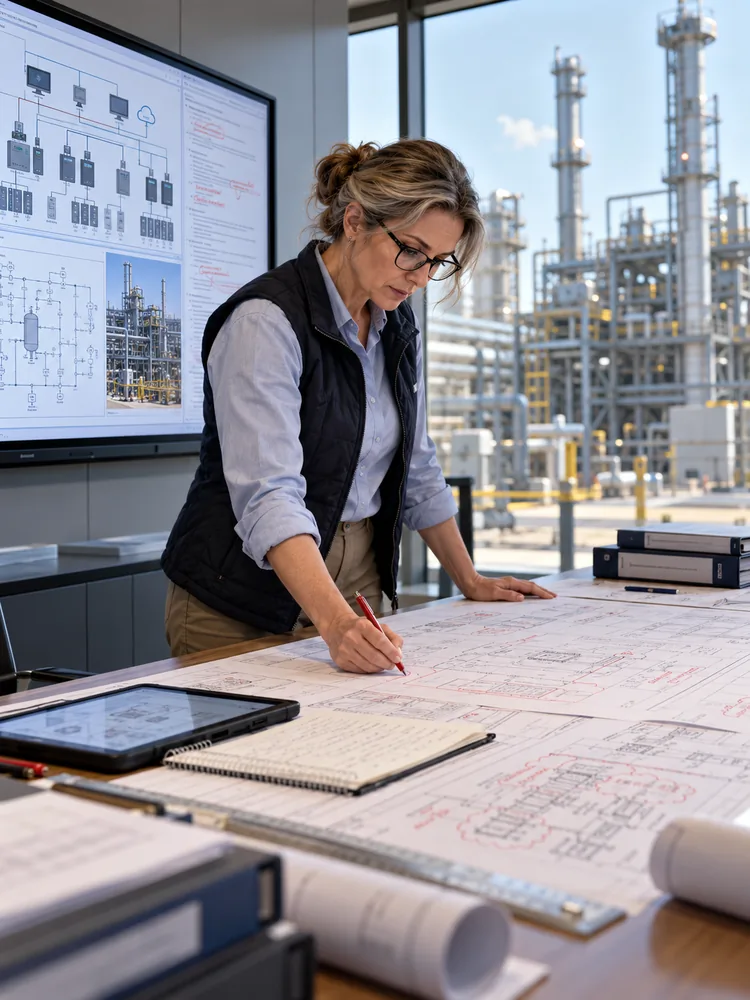
IDS serves as an extension of your plant engineering team, providing independent technical oversight throughout the DCS project lifecycle.
Our engineers review system designs, project documentation, vendor deliverables, and implementation decisions, drawing on IDS control engineering experience to evaluate the project from the owner’s perspective.
IDS establishes the project’s technical requirements and review criteria, evaluates engineering deliverables as the project progresses, documents concerns and recommendations, and works with project stakeholders to resolve issues before they affect installation, startup, or long-term operation.
Key Areas of Oversight
DCS architecture and system design
HMI graphics and operator interface
I/O and instrumentation requirements
Vendor/OEM engineering deliverables
Control strategy and logic
System documentation
Network and communications architecture
Maintainability and lifecycle considerations
Project Representation
IDS provides independent technical representation between the plant owner and the organizations responsible for designing, supplying, integrating, and installing the control system.
We help establish clear technical expectations, review project deliverables, identify gaps and deviations, coordinate technical issues, and give the owner an independent engineering perspective as project decisions are made.
For projects still in the planning and definition phase, IDS also provides DCS consulting to help establish requirements, priorities, and project strategy before execution begins.
IDS provides independent owner-side coordination across major control platforms, including Honeywell DCS, Emerson DeltaV, and Ovation systems.
Owner’s Engineer Support May Include:
Project Requirements Review
System Architecture Review
SAT & Startup Support
DCS Design Reviews
Control Logic & HMI Review
Commissioning Oversight
OEM Submittal Reviews
FAT Witnessing
Punch-List & Acceptance Support
Project Execution
IDS can remain involved through system testing, installation, startup, and commissioning to help verify that the delivered control system meets established project requirements before final acceptance.
IDS can review FAT procedures, witness testing, evaluate control logic and HMI functionality, document deficiencies, and help verify that identified issues are resolved before the system leaves the supplier.
IDS provides owner-side technical support during installation, SAT, startup, commissioning, and performance verification, helping resolve field issues and document outstanding items before final acceptance.
Learn More About DCS Owner’s Engineering
What Is a DCS Owner’s Engineer?
Learn how an Owner’s Engineer represents the plant’s technical interests during DCS upgrades, migrations, and implementation projects. Read the Article →
Talk with an experienced IDS engineer about your existing system, project requirements, and the best path forward.
